Historical places of Antalya
Historical places of Antalya
Hadrian's Gate (Hadrian Kapısı)
Built: 130 AD
Significance: Constructed in honor of Roman Emperor Hadrian's visit.
Features: A well-preserved Roman triumphal arch with three arched gateways and Corinthian columns.
Antalya Old Town (Kaleiçi)
Historical Period: Roman, Byzantine, Seljuk, and Ottoman eras.
Highlights:
Narrow cobbled streets
Ottoman-era houses
Ancient city walls
Roman harbor (now a marina)
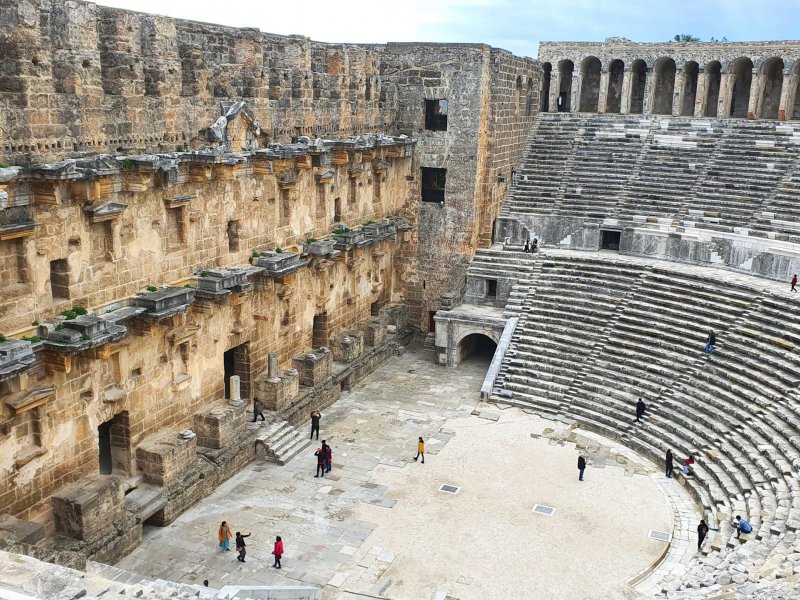
Aspendos Theater
Location: 45 km east of Antalya
Built: 2nd century AD by the Romans
Significance: One of the best-preserved Roman theaters in the world, still used for performances.
Capacity: Around 15,000 spectators
Perge (Perga)
Location: 17 km east of Antalya
Founded: Around 1000 BC
Highlights:
Roman baths
Agora (marketplace)
Stadium
Impressive colonnaded streets and gates
Termessos
Location: In the Taurus Mountains, 30 km northwest of Antalya
Unique Aspect: Built at 1,000 meters above sea level
Significance: Known for resisting Alexander the Great’s siege
Highlights: Theater, gymnasium, and necropolis with stunning mountain views
Phaselis
Location: South of Antalya, near Kemer
Founded: 7th century BC by Rhodians
Special Features:
Three harbors
Roman aqueducts
Baths and agora by the sea
Yivli Minaret Mosque (Ulu Cami)
Built: Originally in the 13th century by the Seljuks
Features: Fluted (Yivli) minaret - a symbol of Antalya
Significance: One of the oldest Islamic buildings in the region
Xanthos and Letoon
UNESCO World Heritage Site
Location: Near the city of Kaş, in Antalya Province
Highlights:
Xanthos: Ancient Lycian capital with tombs, amphitheater, and inscriptions
Letoon: Religious center with temples to Leto, Apollo, and Artemis

Hadrian's Gate (Hadrian Kapısı)
Built: 130 AD
Significance: Constructed in honor of Roman Emperor Hadrian's visit.
Features: A well-preserved Roman triumphal arch with three arched gateways and Corinthian columns.
Antalya Old Town (Kaleiçi)
Historical Period: Roman, Byzantine, Seljuk, and Ottoman eras.
Highlights:
Narrow cobbled streets
Ottoman-era houses
Ancient city walls
Roman harbor (now a marina)
Aspendos Theater
Location: 45 km east of Antalya
Built: 2nd century AD by the Romans
Significance: One of the best-preserved Roman theaters in the world, still used for performances.
Capacity: Around 15,000 spectators
Perge (Perga)
Location: 17 km east of Antalya
Founded: Around 1000 BC
Highlights:
Roman baths
Agora (marketplace)
Stadium
Impressive colonnaded streets and gates
Termessos
Location: In the Taurus Mountains, 30 km northwest of Antalya
Unique Aspect: Built at 1,000 meters above sea level
Significance: Known for resisting Alexander the Great’s siege
Highlights: Theater, gymnasium, and necropolis with stunning mountain views
Phaselis
Location: South of Antalya, near Kemer
Founded: 7th century BC by Rhodians
Special Features:
Three harbors
Roman aqueducts
Baths and agora by the sea
Yivli Minaret Mosque (Ulu Cami)
Built: Originally in the 13th century by the Seljuks
Features: Fluted (Yivli) minaret - a symbol of Antalya
Significance: One of the oldest Islamic buildings in the region
Xanthos and Letoon
UNESCO World Heritage Site
Location: Near the city of Kaş, in Antalya Province
Highlights:
Xanthos: Ancient Lycian capital with tombs, amphitheater, and inscriptions
Letoon: Religious center with temples to Leto, Apollo, and Artemis
Hadrian's Gate (Hadrian Kapısı)
Built: 130 AD
Significance: Constructed in honor of Roman Emperor Hadrian's visit.
Features: A well-preserved Roman triumphal arch with three arched gateways and Corinthian columns.
Antalya Old Town (Kaleiçi)
Historical Period: Roman, Byzantine, Seljuk, and Ottoman eras.
Highlights:
Narrow cobbled streets
Ottoman-era houses
Ancient city walls
Roman harbor (now a marina)
Aspendos Theater
Location: 45 km east of Antalya
Built: 2nd century AD by the Romans
Significance: One of the best-preserved Roman theaters in the world, still used for performances.
Capacity: Around 15,000 spectators
Perge (Perga)
Location: 17 km east of Antalya
Founded: Around 1000 BC
Highlights:
Roman baths
Agora (marketplace)
Stadium
Impressive colonnaded streets and gates
Termessos
Location: In the Taurus Mountains, 30 km northwest of Antalya
Unique Aspect: Built at 1,000 meters above sea level
Significance: Known for resisting Alexander the Great’s siege
Highlights: Theater, gymnasium, and necropolis with stunning mountain views
Phaselis
Location: South of Antalya, near Kemer
Founded: 7th century BC by Rhodians
Special Features:
Three harbors
Roman aqueducts
Baths and agora by the sea
Yivli Minaret Mosque (Ulu Cami)
Built: Originally in the 13th century by the Seljuks
Features: Fluted (Yivli) minaret - a symbol of Antalya
Significance: One of the oldest Islamic buildings in the region
Xanthos and Letoon
UNESCO World Heritage Site
Location: Near the city of Kaş, in Antalya Province
Highlights:
Xanthos: Ancient Lycian capital with tombs, amphitheater, and inscriptions
Letoon: Religious center with temples to Leto, Apollo, and Artemis

